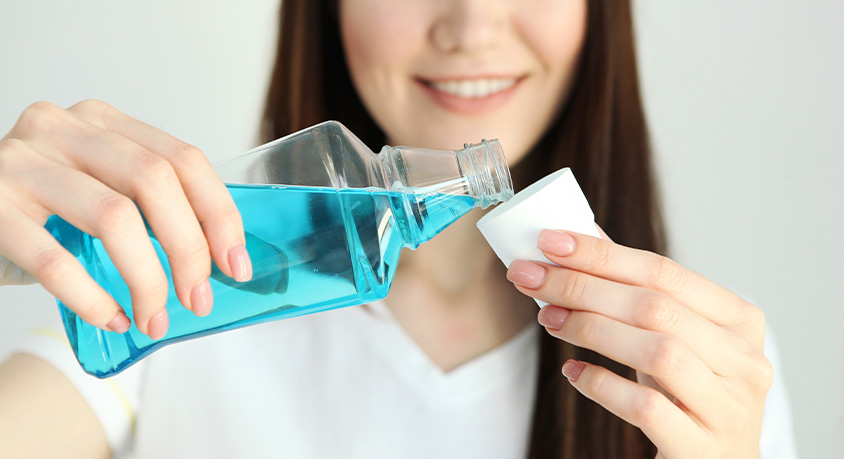
You have an important meeting in an hour. You excuse yourself to the restroom, pull out a small bottle of mouthwash, swish for thirty seconds, and spit. The cool, minty burn feels like proof that it’s working.
E.g. :You Switched to Natural Toothpaste – Now Your Cavities Are Multiplying
- 1、The Alcohol Trap: Why “Burn” Doesn’t Mean “Clean”
- 2、How Dry Mouth Turns Into a Breath Disaster
- 3、The “Morning Breath” Cycle You’re Amplifying
- 4、How to Use Mouthwash Correctly
- 5、The One Exception: Prescription Mouthwash
- 6、FAQs
An hour later, your colleague leans back again. The familiar wave of self-consciousness returns. How can your breath smell bad again so quickly?
You’ve been tricked by the burn. That sharp, alcohol-driven sensation isn’t killing bacteria—it’s setting the stage for more bad breath. And the cure you’ve been using is actually making the problem worse.
The Alcohol Trap: Why “Burn” Doesn’t Mean “Clean”
Most mainstream mouthwashes contain 15–27% alcohol. That alcohol serves two purposes: it dissolves flavor oils and creates a tingling sensation that consumers associate with effectiveness.
Alcohol does kill some oral bacteria on contact. But it evaporates quickly and dries out your mouth. Saliva is your mouth’s natural defense against bad breath. When alcohol removes that protective salivary film, anaerobic bacteria—the ones that produce volatile sulfur compounds (VSCs)—have a field day.
A 2017 study in the Journal of Clinical Periodontology compared alcohol-based and alcohol-free mouthwashes over six months. The alcohol group had significantly higher VSC levels after three months of daily use. Their salivary flow rates dropped by an average of 18%. Less saliva, more smell.
How Dry Mouth Turns Into a Breath Disaster
Your saliva contains histatins, lysozymes, and immunoglobulins—natural antibacterial proteins. It also physically flushes away food particles and dead cells that bacteria feed on.
When alcohol mouthwash dries your mouth, you lose this cleaning system. Bacteria multiply. They break down proteins into VSCs: hydrogen sulfide (rotten eggs), methyl mercaptan (decaying cabbage), and dimethyl sulfide (sweet garbage).
The minty flavor in mouthwash masks these odors for 20–30 minutes. Then the alcohol evaporates, the mask fades, and the bacteria—now more numerous than before—release even more VSCs.
A 2019 trial in The Cochrane Database reviewed 25 studies on mouthwash for halitosis. Alcohol-based rinses reduced bad breath for the first hour but made it statistically worse after four hours. Alcohol-free rinses with zinc or chlorine dioxide showed lasting improvement.
The “Morning Breath” Cycle You’re Amplifying
You wake up with morning breath. What do you do? You reach for mouthwash. The alcohol dries your mouth further. You go about your day, drinking coffee (also drying), breathing through your mouth (also drying). By afternoon, your oral tissues are parched.
Then you use mouthwash again before a date or meeting. Another drying cycle.
Within weeks, your baseline salivary flow has dropped. What was once mild morning breath is now all-day halitosis. You start carrying mouthwash everywhere—trapped in a self-made cycle.
A 2020 survey in the International Journal of Dental Hygiene found that people who used alcohol mouthwash more than twice daily reported three times the rate of chronic dry mouth symptoms compared to non-users. And among those with dry mouth, 90% also reported persistent bad breath.
How to Use Mouthwash Correctly
Mouthwash is not essential. Brushing, flossing, and tongue scraping handle 95% of bad breath causes. But if you enjoy the fresh feeling, here’s how to avoid the rebound effect:
Choose Alcohol-Free
Look for mouthwashes labeled “alcohol-free.” Active ingredients that actually neutralize VSCs include:
- Zinc chloride or zinc acetate – Binds to sulfur compounds.
- Chlorine dioxide – Oxidizes VSCs into odorless compounds.
- Cetylpyridinium chloride (CPC) – Reduces bacterial load, but stains teeth with long use.
Use Mouthwash at a Separate Time From Brushing
Never use mouthwash immediately after brushing. You’ll wash away the high-concentration fluoride from your toothpaste. Use mouthwash at lunch or mid-afternoon instead.
Limit to Once Daily
More is not better. Once daily alcohol-free rinse is sufficient. Twice daily starts to dry even alcohol-free formulas (they still contain detergents).
Address the Root Cause
If you need mouthwash to mask breath, you’re ignoring the source. The primary reservoir for VSCs is the back of your tongue. A tongue scraper removes that biofilm physically. In a 2021 study, tongue scraping reduced bad breath by 75% after two weeks—mouthwash alone only 30%.
The One Exception: Prescription Mouthwash
Chlorhexidine gluconate (prescription only) is a powerful antimicrobial rinse. It kills bacteria effectively. But it’s not for daily use. Dentists prescribe it for one to two weeks after gum surgery or for severe gum inflammation.
Long-term chlorhexidine stains teeth brown, alters taste, and can dry the mouth. It is not a solution for chronic bad breath.
FAQs
Q: I’ve used alcohol mouthwash for years. Can my saliva production recover?
A: Yes, but slowly. Salivary glands adapt to chronic drying. Switch to alcohol-free immediately. Drink more water throughout the day (small sips every 20 minutes). Chew sugar-free gum to stimulate flow. Within four to six weeks, most people notice improved moisture and reduced breath odor without any rinse.
Q: Does homemade mouthwash (salt water, baking soda) work for bad breath?
A: Salt water rinses are safe and mildly antibacterial, but they don’t neutralize VSCs. Baking soda raises oral pH, which bacteria dislike, but its effect lasts less than an hour. Neither is better than tongue scraping. Use them as a temporary rinse after meals if you like, but don’t expect lasting breath improvement.
Q: My dentist recommended a mouthwash for gum disease. Should I stop using it?
A: No. Follow your dentist’s advice for treating active gum disease. Prescription mouthwashes or specific over-the-counter options (like those with stannous fluoride) have proven benefits for gingivitis. The concerns above apply to cosmetic mouthwashes marketed for “fresh breath” with high alcohol content. Therapeutic mouthwashes are different. Ask your dentist whether yours contains alcohol or is meant for short-term use.