You’re eating a sandwich. Your teeth come down on something hard and crunchy. Not a bone—something with a strange, chalky texture. You spit it into your napkin. It’s a small, brownish-yellow chunk that looks like a piece of pebble.
E.g. :Bleeding Gums Aren’t Normal – How Gingivitis and Poor Brushing Habits Fuel Each Other
- 1、Why Tartar Doesn’t Naturally Fall Off Healthy Teeth
- 2、When Calculus Breaks Loose, Something Below Has Changed
- 3、The Hidden Damage Behind That “Clean” Feeling
- 4、Why You Should Never Wait for Tartar to “Self-Remove”
- 5、A Protocol to Stop Further Gum and Bone Loss
- 6、FAQs
You run your tongue along your lower front teeth. There’s a smooth, scooped-out space where that chunk used to be. The tooth feels strangely clean.
You think: “Finally, that ugly buildup is coming off on its own.”
That thought is dangerous. A piece of tartar that falls off by itself is not a sign of improving oral health. It’s a signal that something underneath has already been destroyed.
Why Tartar Doesn’t Naturally Fall Off Healthy Teeth
Dental calculus (tartar) is hardened plaque. It bonds to your enamel through a process of mineralization, locking onto the tooth surface like barnacles on a ship. Under normal conditions, that bond is incredibly strong.
A 2017 study in the Journal of Dental Research measured the adhesion strength of tartar to enamel. It required professional ultrasonic scalers (vibrating at 25,000 cycles per second) to break the bond. Natural chewing forces alone almost never dislodge healthy tartar.
If a piece of calculus falls off while you’re eating or brushing, it means the tooth structure underneath that tartar has changed. The enamel has either eroded, or the tooth surface has fractured. More commonly, the tartar was attached not to enamel, but to a pocket of diseased gum tissue that has now receded.
When Calculus Breaks Loose, Something Below Has Changed
Tartar forms above and below the gumline. Subgingival calculus (below the gum) attaches to both the tooth root and the inflamed pocket lining. As gum disease advances, the bone supporting your tooth dissolves. The gum detaches, creating a deeper pocket.
Eventually, that deep pocket can shrink on its own—not because it’s healing, but because the gum tissue has died and pulled away. The calculus that was wedged in the pocket suddenly has no support. It loosens and falls out.
A 2019 study in the Journal of Clinical Periodontology examined patients who reported spontaneous tartar detachment. Over 80% had moderate to severe periodontitis with measurable bone loss. The area where the tartar fell off had lost an average of 3mm of attachment. That’s irreversible damage.
The Hidden Damage Behind That “Clean” Feeling
When tartar falls off, the exposed surface feels smooth. You might think your tooth is healthier.
Look closer. That smooth surface is often not enamel—it’s exposed root dentin. The tartar was protecting nothing. It was hiding the fact that your gum had receded so far that the root was already vulnerable. Now the root is open to bacteria, cold, and abrasion.
Worse, the rough spot where tartar broke away may have left microscopic ledges. Those ledges trap new plaque instantly, and new calculus forms faster than before.
A 2020 report in Caries Research noted that teeth with spontaneous tartar loss had three times the rate of root caries (cavities on root surfaces) within 12 months compared to teeth that had professional scaling. The irregular surface left behind is a bacterial paradise.
Why You Should Never Wait for Tartar to “Self-Remove”
Some people avoid dental cleanings because they believe tartar will eventually fall off. That belief keeps them away from the dentist for years.
The truth: waiting for spontaneous tartar loss means waiting for gum disease to destroy the attachment around your teeth. By the time a chunk falls out, you’ve already lost bone that will never grow back.
A 2021 long-term study followed adults who delayed scaling until tartar began breaking off naturally. At that point, 70% had periodontitis requiring deep cleaning (scaling and root planing). Over half needed at least one tooth extracted within five years.
Professional cleaning removes tartar before it causes bone loss. Spontaneous loss happens after bone loss. The order matters.
A Protocol to Stop Further Gum and Bone Loss
If a piece of tartar has already fallen out, you cannot reverse the damage. But you can stop it from getting worse.
Step One: See a Dentist Immediately
Don’t wait for your next routine cleaning. Request a comprehensive periodontal exam. The dentist will measure pocket depths around every tooth with a small probe. Pockets deeper than 4mm indicate active bone loss.
Step Two: Complete a Full Scaling and Root Planing
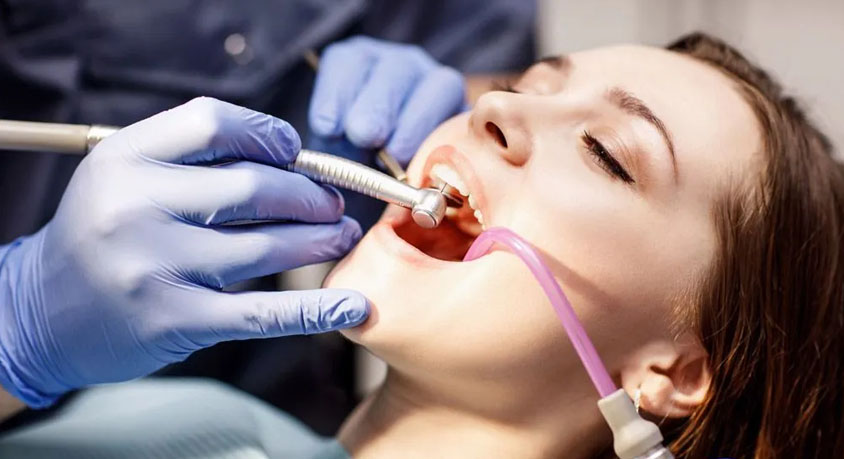
A professional deep cleaning removes remaining tartar above and below the gumline. This is not optional. Leaving any calculus behind accelerates further bone loss.
Step Three: Clean Between Teeth Daily
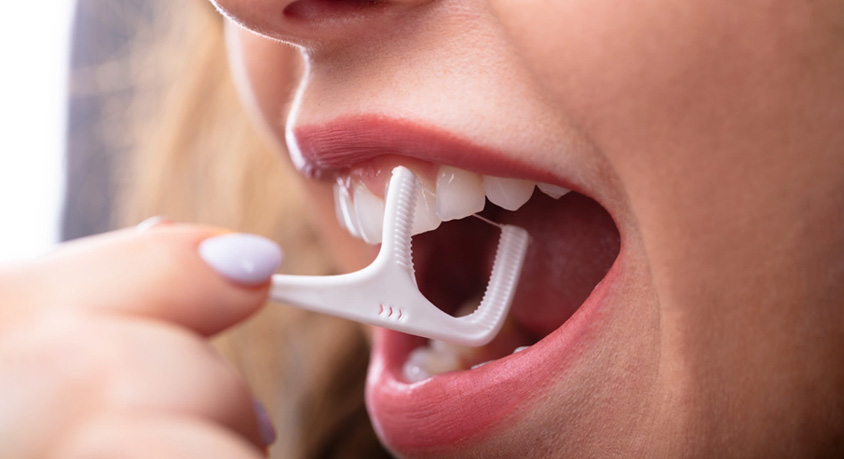
Use an interdental brush (not floss) for wider gaps. For tight spaces, use floss or a water flosser on low pressure. Daily cleaning prevents new calculus from forming in the vulnerable area.
Step Four: Switch to a Soft Toothbrush
Aggressive brushing on exposed roots wears away cementum and dentin. Use an extra-soft brush with gentle circular motions.
A 2022 clinical recommendation in the Journal of the American Dental Association stated: “Spontaneous calculus detachment should be treated as a periodontal emergency. Immediate professional debridement and home care reinforcement can prevent progression to tooth loss in 85% of cases.”
FAQs
Q: I coughed up a small, hard white piece. Could that be a tonsil stone instead of tartar?
A: Yes. Tonsil stones are soft, crumbly, and usually white or yellow. They smell foul when crushed. Tartar from teeth is harder, brownish, and often has a curved shape matching the tooth surface. If the piece came from your throat (you coughed it up), it’s likely a tonsil stone. If you felt it loosen from a tooth while eating or brushing, it’s calculus.
Q: Can I use a tartar-control toothpaste to prevent more pieces from falling off?
A: Tartar-control toothpastes contain pyrophosphate or zinc citrate, which slow new calculus formation. They cannot reattach loose tartar or reverse bone loss. Use one, but only after a professional cleaning. Do not rely on toothpaste to remove existing deposits.
Q: My gums don’t bleed and don’t hurt. Could I still have bone loss if tartar fell off?
A: Absolutely. Periodontitis is often painless until very late stages. Bleeding gums are a sign of active inflammation, but in some people, chronic inflammation can smolder without obvious bleeding. The only way to know is a dental exam with probing and X-rays. Do not assume “no pain means no problem.”