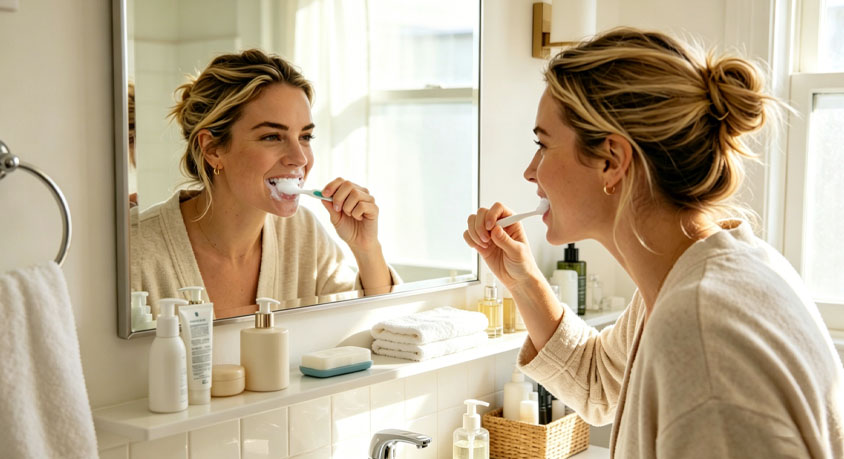
You squeeze a long, curling ribbon of toothpaste across the entire length of your toothbrush bristles. It looks like the commercials. It feels right. More paste must mean more clean, doesn’t it?
E.g. :Tooth Sensitivity Isn’t Thin Enamel – Exposed Roots Are the Real Problem
- 1、The Pea-Sized Rule: Where It Comes From
- 2、The Hidden Risk: Swallowing Too Much Fluoride
- 3、What Happens to the Extra Toothpaste
- 4、The “Too Much” Problem Beyond Fluoride
- 5、How to Get the Pea-Sized Habit Right
- 6、Why Commercials Show the Full Ribbon
- 7、FAQs
That’s what most people believe. Advertisements show that generous swirl for a reason: it sells more toothpaste. But your teeth don’t benefit from the extra product. In fact, using too much can cause problems you’ve never considered.
The Pea-Sized Rule: Where It Comes From
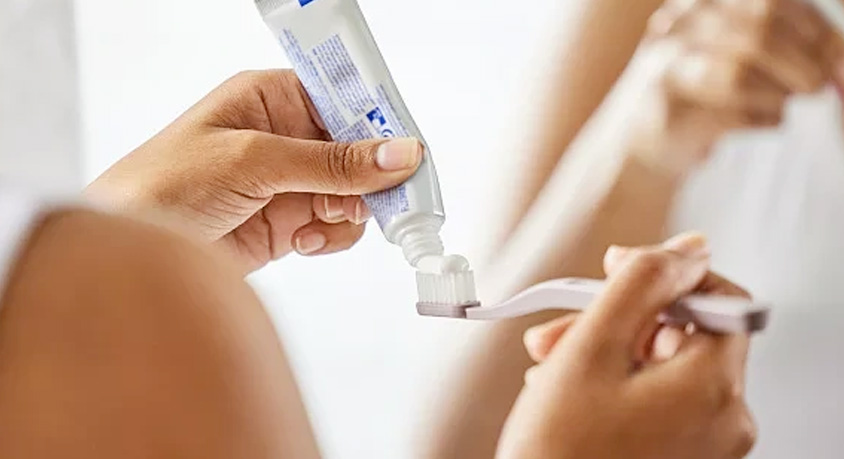
Dentists have recommended a pea-sized amount of toothpaste for adults for decades. For children under three, a smear the size of a grain of rice.
Why so small? Because the active ingredient in toothpaste—fluoride—works at very low concentrations. A pea-sized blob (about 0.25 grams) contains roughly 0.25 mg of fluoride. That’s plenty to coat all tooth surfaces and provide cavity protection.
A 2017 study in the Journal of Dental Research measured fluoride retention after brushing with different amounts. Participants using a pea-sized amount had the same salivary fluoride levels one hour after brushing as those using a full brush (1.0 gram). The extra product simply got rinsed or spat away.
The Hidden Risk: Swallowing Too Much Fluoride
Fluoride is safe in small doses. But swallowing large amounts regularly—especially during childhood—can cause dental fluorosis: white streaks or brown mottling on developing teeth.
A 2019 report from the Centers for Disease Control and Prevention noted that nearly 40% of adolescents showed some signs of mild fluorosis, often traced to swallowing toothpaste during early years. The culprit? Using too much paste and not spitting thoroughly.
For adults, chronic swallowing of large fluoride amounts is rarely dangerous, but it can cause stomach upset, nausea, or even skeletal fluorosis over decades (extremely rare). The real issue is unnecessary waste and potential irritation.
What Happens to the Extra Toothpaste
You brush. You spit. Most of that long ribbon goes down the drain or into the sink. The small amount that stays in your mouth is diluted by saliva and spread thin.
A 2020 experiment in Clinical Oral Investigations had volunteers brush with three different amounts: 0.25g (pea-sized), 0.5g, and 1.0g (full brush). Researchers measured foam coverage and plaque removal. There was no difference in cleaning effectiveness between the three groups. The only difference? The 1.0g group took longer to rinse because of excessive foam.
More toothpaste does not mean cleaner teeth. It means more foam, more waste, and for children, more risk.
The “Too Much” Problem Beyond Fluoride
Some toothpastes contain additional ingredients that can cause problems in large amounts:
- Abrasives (silica, calcium carbonate). High doses increase enamel wear, especially if you brush aggressively.
- Detergents (SLS). Excess foam can trigger canker sores in susceptible people.
- Flavors and sweeteners. Sorbitol and other sugar alcohols can cause bloating or diarrhea if swallowed in large quantities (rare from brushing, but possible in children).
Sticking to a pea-sized amount minimizes exposure to these non-essential ingredients while delivering full fluoride benefit.
How to Get the Pea-Sized Habit Right
Many adults have never seen what a true pea-sized amount looks like on a brush. Try this:
- Squeeze a small dot about the diameter of a green pea (around 5mm across) onto the center of your bristles.
- Do not spread it the full length.
- Brush for two full minutes. The paste will foam and spread naturally.
For children:
- Under 3 years: a rice-grain-sized smear.
- 3 to 6 years: a pea-sized amount. Supervise brushing to ensure they spit, not swallow.
A 2021 survey in Pediatric Dentistry found that 68% of parents used too much toothpaste for their children, often a full strip. After a simple education session, 90% switched to the correct amount and reported no difference in cleaning perception.
Why Commercials Show the Full Ribbon
Toothpaste companies are not trying to harm you. They are trying to sell more product. A long, dramatic ribbon on a brush looks satisfying and suggests value.
But dental professionals have pushed back. The American Dental Association’s official guideline clearly states: “Use a pea-sized amount of fluoride toothpaste for adults and children over 3.”
If you’ve been using more, don’t worry—you haven’t damaged your teeth. But you can save money and reduce unnecessary fluoride ingestion by simply squeezing less.
FAQs
Q: What if I have sensitive teeth and need extra desensitizing ingredients?
A: Desensitizing agents like potassium nitrate or stannous fluoride work at the same concentration whether you use a pea-sized or full brush amount. More paste does not mean more desensitization. Stick to pea-sized and brush for two full minutes to ensure contact time.
Q: Should I use more toothpaste if I have an electric toothbrush?
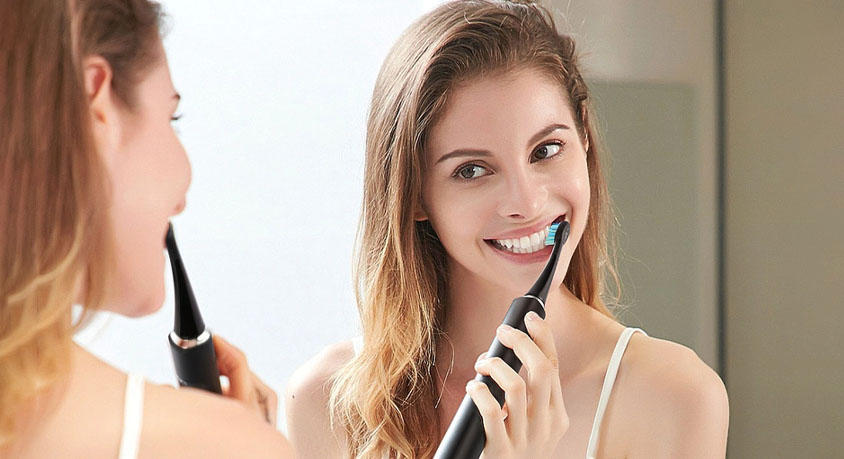
A: No. Electric brushes spread paste more efficiently because the bristle motion distributes it quickly. A pea-sized amount is actually easier to control on an electric brush—full strips often foam out of your mouth immediately.
Q: My toothpaste has baking soda instead of fluoride. Does the amount matter then?
A: Baking soda toothpastes rely on mild abrasion to clean. Even then, a pea-sized amount is sufficient. Using more increases the risk of gum irritation and does not improve stain removal. For cavity protection, choose a fluoride toothpaste instead.