You spit into the sink after brushing. A faint pink tinge swirls down the drain. You think: “I probably brushed too hard.” So you buy an extra-soft brush and start avoiding your gumline.
E.g. :Does Teeth Cleaning Widen Gaps – Tartar Removal Reveals What Was Hidden
- 1、Why Healthy Gums Never Bleed (And Inflamed Gums Bleed Easily)
- 2、The Vicious Cycle: Avoiding the Bleeding Area Makes Plaque Worse
- 3、The Overlooked Link Between Gingivitis and Bad Breath
- 4、A Simple Two-Week Protocol to Stop Bleeding
- 5、FAQs
That’s exactly what millions of people do every day. And it’s the worst possible response.
Bleeding gums are not a sign of aggression. They’re a sign of inflammation. And avoiding the area only makes things worse. Here’s what’s really happening inside your mouth—and why that pink foam is a warning you shouldn’t ignore.
Why Healthy Gums Never Bleed (And Inflamed Gums Bleed Easily)
Take your finger and gently press on your forearm. Does it bleed? No. Healthy tissue doesn’t rupture from light pressure. The same is true for your gums.
When dental plaque—a sticky biofilm of bacteria—accumulates along your gumline, your immune system responds. Blood vessels dilate and become fragile. Even gentle brushing causes them to break open. That’s the pink you see.
According to the American Dental Association, nearly half of adults over 30 have some form of gum disease. The earliest stage, gingivitis, is defined by bleeding on gentle probing. The good news? Gingivitis is completely reversible. The bad news? Most people misinterpret the signal and start brushing less thoroughly.
The Vicious Cycle: Avoiding the Bleeding Area Makes Plaque Worse
Here’s the cruel irony. Your gums bleed because of bacteria. If you brush more gently or skip the inflamed spots, plaque continues to build. More bacteria → more inflammation → more bleeding.
A 2018 study in the Journal of Clinical Periodontology followed adults who noticed bleeding and responded by reducing brushing pressure and coverage. After four weeks, their bleeding scores nearly doubled. The group who continued gentle but thorough cleaning—including the bleeding areas—saw bleeding drop by 70% within two weeks.

The Right Way to Brush Inflamed Gums
You don’t need to scrub hard. You need to be consistent and precise.
- Use a soft toothbrush.
- Angle bristles 45 degrees toward the gumline.
- Use small circular motions, not back-and-forth sawing.
- Cover every surface, including where it bleeds.
Within 5–10 days of correct brushing and flossing, inflammation subsides, blood vessels tighten, and bleeding stops. But only if you don’t retreat.
The Overlooked Link Between Gingivitis and Bad Breath
Most people think bleeding gums and bad breath are separate problems. They’re not.
The same bacteria that cause gum inflammation also produce volatile sulfur compounds (VSCs)—the molecules responsible for rotten-egg breath. When your gums bleed, those bacteria have direct access to your bloodstream and soft tissues, accelerating their growth.
A 2020 review in Oral Diseases found that people with gingivitis had VSC levels three times higher than those with healthy gums. Treat the inflammation, and both symptoms improve together.
A Simple Two-Week Protocol to Stop Bleeding
You don’t need expensive treatments. You need consistency and the right tools.
Week One: Gentle But Complete Cleaning
- Brush twice daily using a soft brush and proper technique. Don’t skip bleeding spots.
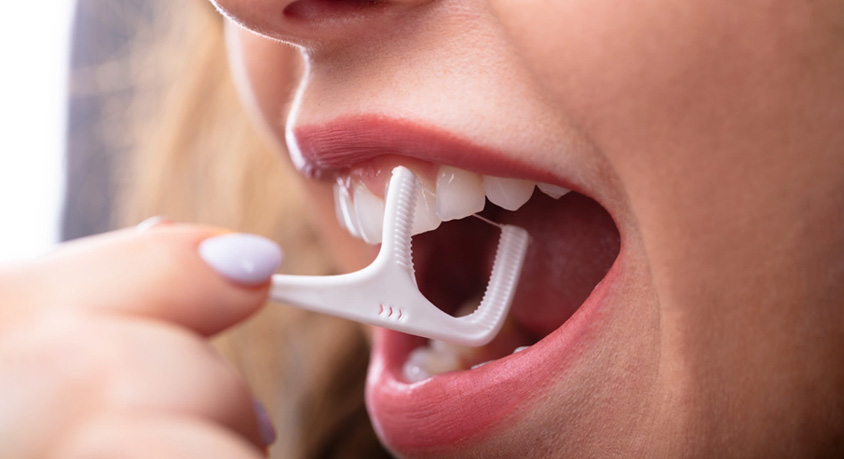
- Clean between teeth once daily using an interdental brush or floss. This disrupts plaque where a toothbrush can’t reach.
- Expect bleeding to increase slightly in the first 3–4 days. That’s normal. Stick with it.
Week Two: Watch the Pink Disappear
By day 7–10, bleeding should noticeably decrease. By day 14, most people have no bleeding at all.
A 2019 clinical trial in the International Journal of Dental Hygiene had participants with gingivitis follow this protocol. After 14 days, 86% had no bleeding on gentle brushing. No mouthwash, no special paste, no scaling—just correct mechanical cleaning.
When to See a Dentist
If bleeding continues after three weeks of diligent, correct home care, see a professional. You may have periodontitis—a more advanced form of gum disease that requires scaling and root planing. But for the vast majority, bleeding gums are purely a behavioral problem, not a surgical one.
FAQs
Q: Is it safe to floss if my gums bleed a lot?
A: Yes. In fact, flossing is the most effective way to stop bleeding. The bleeding is caused by inflammation from plaque between teeth. Flossing removes that plaque. Floss gently, hug the tooth surface, and go slightly below the gumline. Bleeding usually stops within a week.
Q: Can certain medical conditions cause bleeding gums besides gingivitis?
A: Yes, but they are rare. Uncontrolled diabetes, bleeding disorders (like hemophilia), vitamin C or K deficiencies, and some medications (blood thinners) can worsen gum bleeding. If your gums bleed heavily even with perfect cleaning and no other oral symptoms, consult your primary care doctor.
Q: Are electric toothbrushes better for bleeding gums?
A: They can be, but only if used correctly. Look for one with a pressure sensor that lights up when you push too hard. Use a soft brush head and let the brush do the movement—don’t scrub. Manual brushes work just as well with proper technique. Consistency matters more than the tool.