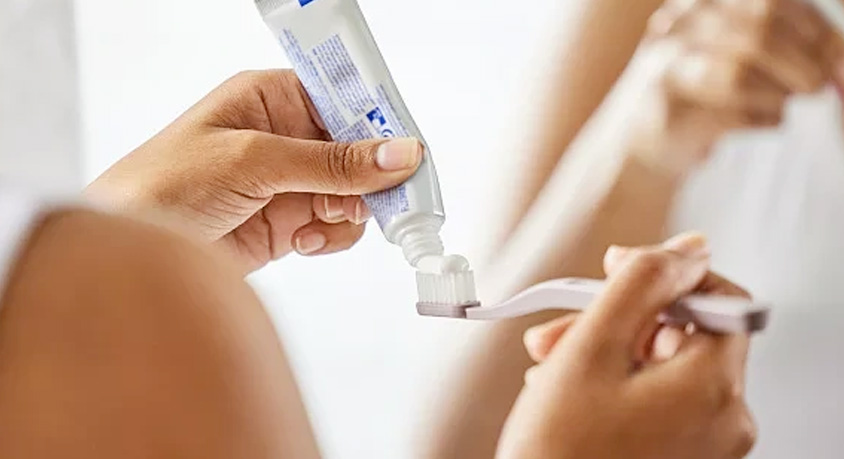
You want whiter teeth. You pick a toothpaste labeled “whitening” or “extra whitening” and squeeze a generous ribbon onto your brush. It feels slightly gritty—like fine sand. That grittiness feels effective. It must be scrubbing away stains.
E.g. :Does Teeth Cleaning Widen Gaps – Tartar Removal Reveals What Was Hidden
- 1、The Hidden Number That Determines Tooth Wear
- 2、How Abrasives Actually Damage Enamel
- 3、The Whitening Paradox: Brighter Today, Darker Tomorrow
- 4、Which Toothpastes Are Safest? (And Which to Avoid)
- 5、How to Whiten Safely Without Grinding Enamel
- 6、A Simple Home Test for Toothpaste Abrasiveness
- 7、FAQs
And it is. But it’s also scrubbing away something else. Something that never grows back.
Toothpaste manufacturers rarely advertise one number on their boxes: the Relative Dentin Abrasivity (RDA) score. That number tells you how much enamel and dentin your toothpaste wears down with every brush. Most whitening pastes have high RDA scores. And most consumers have never heard of RDA.
The Hidden Number That Determines Tooth Wear
In the 1970s, dental researchers developed the RDA scale to measure how abrasive a toothpaste is. The scale starts at 0 (water) and goes to over 250 (some industrial polishes).
- 0–70: Low abrasivity (standard fluoride toothpastes)
- 70–100: Medium abrasivity (some anti-plaque pastes)
- 100–150: High abrasivity (most whitening pastes)
- 150–250: Unacceptably high (avoid for daily use)
The American Dental Association recommends toothpastes with RDA below 250. That’s a very loose standard. Many whitening toothpastes have RDA values between 120 and 200. A 2017 study in the Journal of Dentistry tested popular whitening toothpastes. Several exceeded 150—meaning they remove enamel at nearly triple the rate of a standard paste.
How Abrasives Actually Damage Enamel
Toothpaste contains abrasive particles—silica, alumina, calcium carbonate, or baking soda. These particles physically scrub away surface stains. But they also scrub away the outer layer of enamel, especially when combined with aggressive brushing.
Enamel is hardest tissue in the human body, but it’s also thin. Average enamel thickness is 1.5–2.5mm. Scrubbing away 0.1mm per year might not sound like much, but over decades, that’s the difference between a healthy tooth and a sensitive, yellowed one.
A 2019 laboratory study in Caries Research simulated 10 years of brushing with different RDA toothpastes. The low-abrasivity group (RDA 50) lost 0.08mm of enamel. The high-abrasivity whitening group (RDA 150) lost 0.24mm—three times more. And that was with correct brushing technique. Add aggressive scrubbing, and the loss doubles.
The Whitening Paradox: Brighter Today, Darker Tomorrow
Whitening toothpastes remove extrinsic stains (coffee, tea, tobacco) by polishing the enamel surface. That’s fine for occasional use. But as enamel thins, the darker dentin underneath becomes more visible. Your teeth may actually look more yellow over time—the opposite of what you wanted.
Dentin is naturally yellowish. Enamel is translucent, with a bluish-white hue. When enamel thins, the yellow dentin shines through. Heavy users of abrasive whitening pastes often develop a “shine-through” effect: teeth appear slightly more yellow than before they started whitening.
A 2020 survey in the Journal of Esthetic and Restorative Dentistry found that 34% of long-term whitening toothpaste users reported increased tooth sensitivity and no perceived whitening benefit after two years. Their enamel had worn enough to expose dentin, but not enough to remove deep stains.
Which Toothpastes Are Safest? (And Which to Avoid)
You don’t need to memorize RDA tables. Here’s a practical guide:
Safest for Daily Use (RDA < 70)
- Basic fluoride toothpastes (no whitening claims)
- Children’s toothpastes
- “Sensitive” toothpastes (often lower abrasivity)
Moderate (RDA 70–100)
- Anti-plaque / tartar control pastes
- Some natural toothpastes with baking soda
High / Avoid for Daily Use (RDA > 100)
- Most whitening pastes
- “Extra whitening” or “Deep clean” formulas
- Charcoal toothpastes (many exceed RDA 200)
A 2021 review in the British Dental Journal warned specifically about charcoal toothpastes. Several tested products had RDA values above 200, with some exceeding 250—the equivalent of brushing with fine sandpaper. The authors recommended against any charcoal-based toothpaste for daily use.
How to Whiten Safely Without Grinding Enamel
If you want whiter teeth, here’s a low-abrasion approach:
Use a Low-RDA Paste for Daily Brushing
Brush twice daily with a standard fluoride toothpaste (RDA < 70). This removes plaque without significant wear.
Use a Whitening Paste Once a Week
If you have surface stains, use a whitening toothpaste once or twice a week, not twice daily. This gives enamel time to remineralize between abrasive exposures.
Try Non-Abrasive Whitening Methods
- Hydrogen peroxide strips or gels (follow package instructions—short exposure times)
- Professional in-office whitening (protects gums and controls concentration)
- Baking soda paste mixed fresh (RDA around 70 when used occasionally)
Address the Source of Stains
Rinse or brush immediately after coffee, tea, or red wine. Use a straw for dark liquids. Stop smoking. Stain prevention is far better than stain removal.
A 2022 clinical recommendation in the Journal of the American Dental Association stated: “For patients with extrinsic stains, the least abrasive effective method should be chosen. Daily use of high-RDA whitening toothpastes is not supported by evidence and may cause irreversible enamel loss.”
A Simple Home Test for Toothpaste Abrasiveness
Take your toothpaste and rub a small amount between your thumb and forefinger. Feel the grit. If it feels like fine beach sand, it’s likely above RDA 100. If it feels smooth like lotion, it’s low-abrasivity.
This test isn’t scientific, but it’s a useful proxy. The grittier the paste, the more enamel it removes.
FAQs
Q: Can I reverse enamel loss from abrasive toothpaste?
A: No. Enamel does not regenerate. However, you can stop further loss by switching to a low-RDA paste and using a soft brush. Fluoride helps remineralize the very outer layer, but it cannot restore lost thickness.
Q: Is baking soda toothpaste safe for daily use?
A: Baking soda (sodium bicarbonate) has low abrasivity (RDA around 70) when formulated properly. However, many commercial “baking soda” pastes add silica for extra grit. Read the label. Pure baking soda mixed with water is safe for occasional use, but it lacks fluoride.
Q: My dentist recommended a prescription fluoride toothpaste. Is that abrasive?
A: Prescription fluoride toothpastes (like 5000 ppm) typically have low abrasivity because the active ingredient is fluoride, not abrasives. They are safe for daily use and actually protect enamel. Do not switch to a whitening paste instead—you’ll lose the high fluoride benefit.