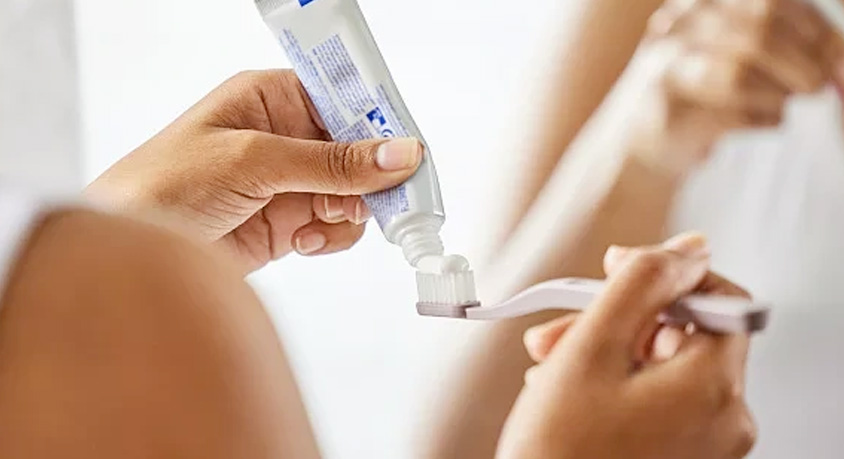
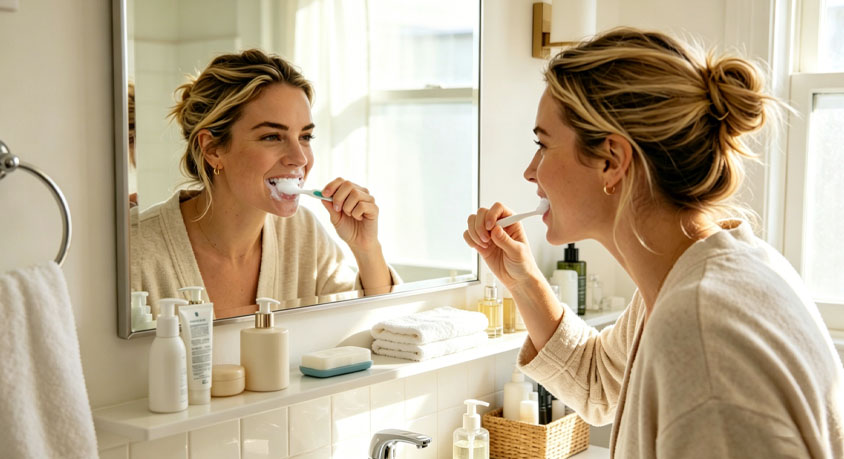
You run your tongue along the front of your lower teeth, near the gumline. Something feels wrong. There’s a small notch. A scooped-out dent. Not a cavity—no dark spot, no pain. Just a groove.
E.g. :Your Expensive Electric Toothbrush Isn’t Cleaning Better Than a Cheap Manual
- 1、The Notch You Can’t Unsee: What Toothbrush Abrasion Looks Like
- 2、Why “Scrubbing” Feels Right But Destroys Enamel
- 3、The “Harder, Faster” Myth That Worsens Everything
- 4、The Surprising Connection to Gum Recession
- 5、How to Brush Correctly: A 30-Second Technique Change
- 6、Can You Fix Existing Grooves?
- 7、FAQs
You mention it at your next dental checkup. The hygienist nods. “Toothbrush abrasion. Very common.”
She asks how you brush. You show her: back and forth, side to side, firm pressure. Just like you were taught as a child.
That’s the problem. That familiar horizontal scrubbing motion—the one most people use—is slowly carving permanent grooves into your teeth. And you’ve probably been doing it for decades.
The Notch You Can’t Unsee: What Toothbrush Abrasion Looks Like
Toothbrush abrasion isn’t dramatic. It doesn’t hurt at first. It starts as a shallow, wedge-shaped indentation right at the gumline, usually on the canine and premolar teeth. Dentists call these non-carious cervical lesions (NCCLs)—“non-carious” meaning not caused by decay.
Over years, the notch deepens. The enamel thins, then disappears, exposing yellowish dentin. Cold drinks and sweet foods start to trigger sharp twinges. If the notch reaches the inner pulp, you’ll need a filling or even a root canal.
A 2018 study in the Journal of Dentistry examined 1,000 adults and found that over 60% had at least one cervical lesion. The strongest predictor? Brushing technique—not frequency, not toothpaste brand, not bristle hardness. Horizontal brushing was the number one risk factor.
Why “Scrubbing” Feels Right But Destroys Enamel
Think about cleaning a dirty pan. You scrub back and forth. More pressure, more scrubbing, more clean. That logic makes perfect sense for dishes.
Your teeth are not dishes.
Enamel is hard, but it’s also brittle. The neck of the tooth (where the crown meets the root) has the thinnest enamel—sometimes only 0.5mm thick. When you scrub horizontally with a toothbrush, you flex the tooth neck microscopically with each stroke. Flexion plus abrasive toothpaste creates tiny stress fractures.
Over thousands of strokes per year, those fractures widen and coalesce. A groove forms. Then deepens.
This is not plaque removal. This is mechanical erosion. And the damage is permanent.

The “Harder, Faster” Myth That Worsens Everything
Most people believe that aggressive brushing equals cleaner teeth. Some even choose hard-bristle brushes for that “deep clean” feel.
A 2020 survey in the International Journal of Dental Hygiene found that 47% of adults believed “brushing harder removes more plaque.” The same study measured actual plaque removal: gentle brushing with a soft brush removed just as much plaque as aggressive scrubbing. The only difference? Aggressive brushing caused ten times more enamel wear in laboratory tests.
Hard bristles make it worse. A 2019 study compared soft, medium, and hard bristles on extracted teeth over simulated three months of brushing. Hard bristles produced three times more abrasion than soft bristles—with no additional cleaning benefit.
The Surprising Connection to Gum Recession
Toothbrush abrasion and gum recession often travel together. As your gums recede from years of horizontal scrubbing, they expose more of the vulnerable root surface. The root has no enamel at all—just cementum, which is even softer.
Once the notch reaches the root, progression accelerates. You may notice that the groove feels “sharp” with your fingernail. That’s dentin.
A 2017 longitudinal study followed patients with early cervical lesions over five years. Those who continued horizontal brushing saw the notch depth increase by an average of 0.3mm per year. Those who switched to a modified vertical or circular technique had no measurable progression.
How to Brush Correctly: A 30-Second Technique Change
You don’t need a new toothbrush (though a soft one helps). You need to retrain your muscle memory.
The Modified Bass Technique
- Angle the bristles 45 degrees toward the gumline.
- Use short, gentle back-and-forth motions at the gumline only—not across the whole tooth. Each stroke should be the width of one tooth.
- For the chewing surfaces, use a small circular motion.
- For the inside of front teeth, tilt the brush vertically and use up-and-down strokes.
No sawing. No “scrubbing the whole row.”
The Pressure Test
Hold your toothbrush with two fingers only—like a pencil. If you feel your knuckles whitening or your forearm tensing, you’re pressing too hard. Some electric toothbrushes have built-in pressure sensors that light up or slow down when you push too much.
Let Time Do the Work
Two minutes. That’s all it takes. Scrubbing harder doesn’t clean faster—it just damages. Use a timer or a toothbrush with a quadrant pacer.
Can You Fix Existing Grooves?
Shallow notches (less than 0.5mm deep) do not need treatment. Stopping further abrasion is enough. The tooth will not heal, but it won’t get worse.
Deeper notches with sensitivity may need a filling. Dentists use tooth-colored composite resin to fill the groove, which protects the dentin and reduces pain.
If the notch is very deep but without pain, some dentists recommend monitoring. Fillings can fail over time and may require replacement. Prevention is always better than repair.
A 2021 clinical recommendation in the Journal of Esthetic and Restorative Dentistry stated: “The first line of treatment for cervical lesions is behavior change. Restoration should be reserved for symptomatic or rapidly progressing cases.”
FAQs
Q: Is an electric toothbrush safer for preventing abrasion?
A: Yes, if it has a pressure sensor. Many oscillating-rotary electric brushes stop oscillating when you push too hard. Sonic brushes may not stop, but they require very light pressure—just guide the brush, don’t push. Avoid electric brushes with stiff bristles or cheap models without pressure limiting.
Q: Can whitening toothpaste make abrasion worse?
A: Yes. Whitening toothpastes are more abrasive because they contain silica or alumina particles to polish away surface stains. If you already have cervical notches, switch to a non-abrasive fluoride toothpaste. Look for a Relative Dentin Abrasivity (RDA) score below 100 (most standard pastes are 70–80; whitening pastes can exceed 150).
Q: I brush gently but still have notches. Could something else be causing them?
A: Yes. Acidic foods and drinks (soda, citrus, wine) soften enamel, making it more vulnerable to even gentle brushing. And nighttime clenching (bruxism) flexes the tooth neck under pressure, which can initiate lesions without brushing at all. If you’ve switched to correct brushing but notches continue deepening, ask your dentist to evaluate you for bruxism or acid erosion.